Three generations in clay.
The work should feel ancient, but not old-fashioned. Quiet, precise, and made from rough material — clay, fire, hand, and repetition.
Ceramics has been in the family for three generations — from the family’s studios in Dunte, Latvia, to a ceramics practice in Iceland. What passes from hand to hand is not a technique; it is a way of paying attention. This page is the record of that line: grandfather, father, son, and the standard the work is held to.
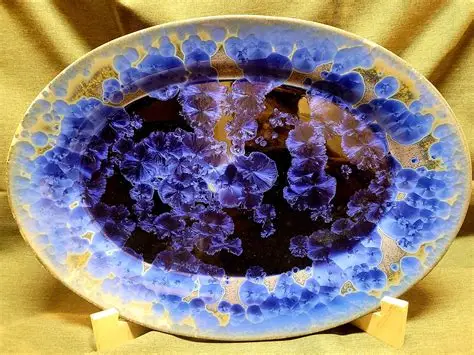
Crystalline glaze archive.
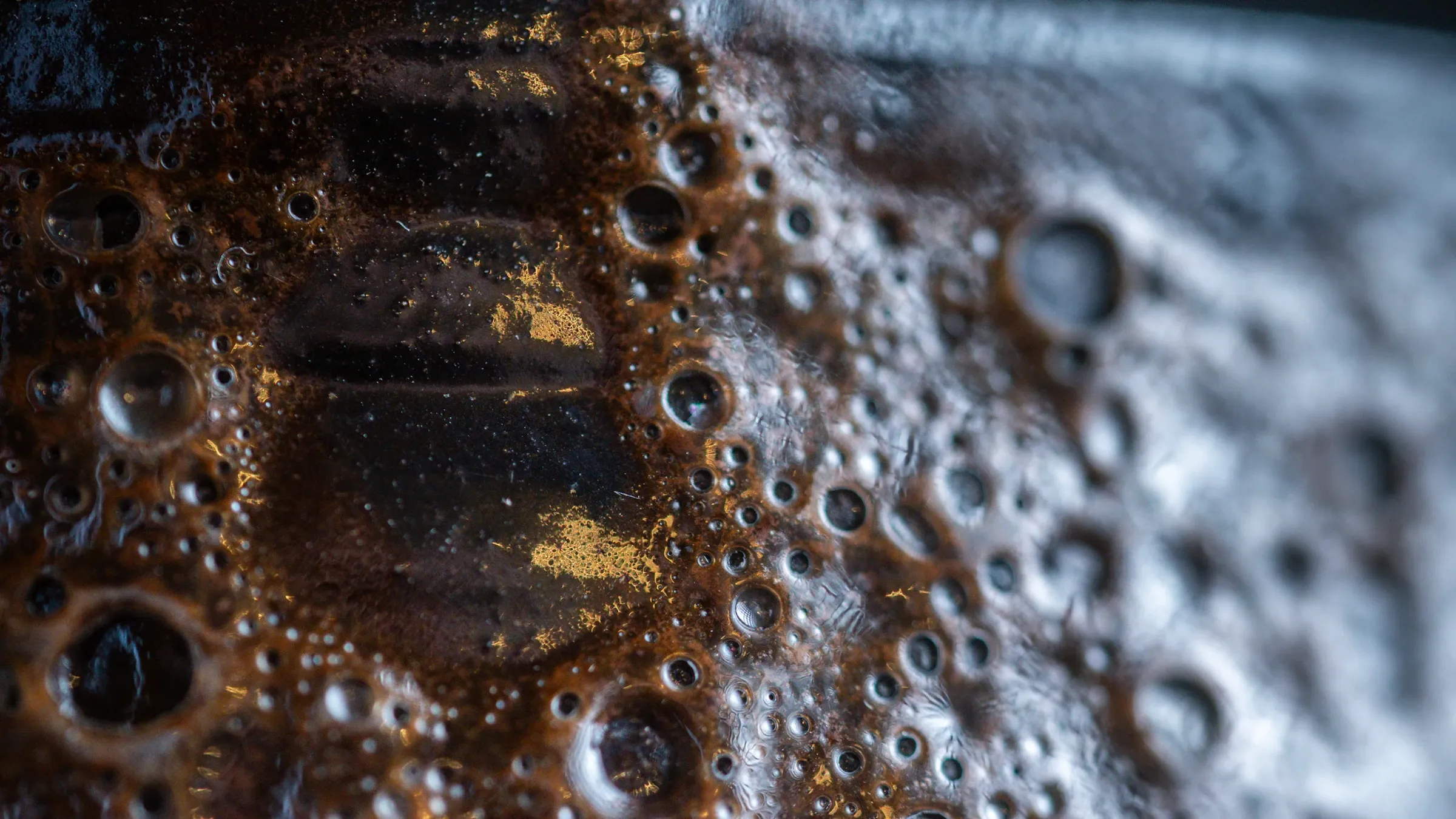
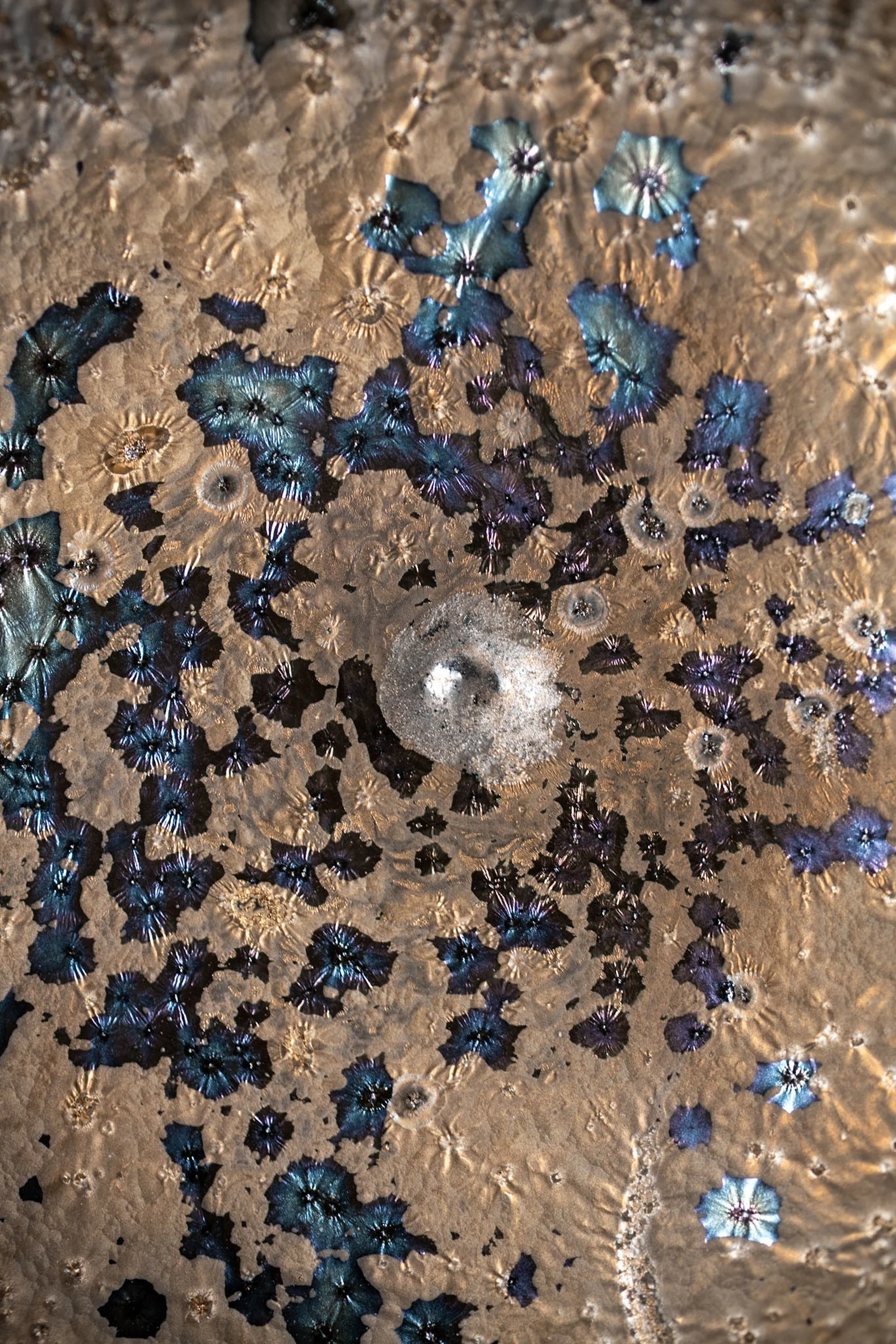
Arnis Preiss, Matiass’s grandfather, is a Latvian ceramicist who worked in Dunte, in the Limbaži region of Latvia, and gave his working life to one of the most demanding disciplines in the field: crystalline glazes — surfaces on which mineral crystals are grown inside the kiln itself, the temperature held for hours at exact points so that zinc and silica bloom into flowers of glass.
A crystalline surface cannot be painted on, and it cannot be corrected. It either grows in the fire or it does not; most attempts fail, and the ones that succeed can never be repeated. Matiass remembers his grandfather’s hand-thrown vases and refined teapots — and, more than the objects, the patience they stood for.
This section is kept as an archive of surface, mineral, heat, and patience.
.jpeg)
.jpeg)
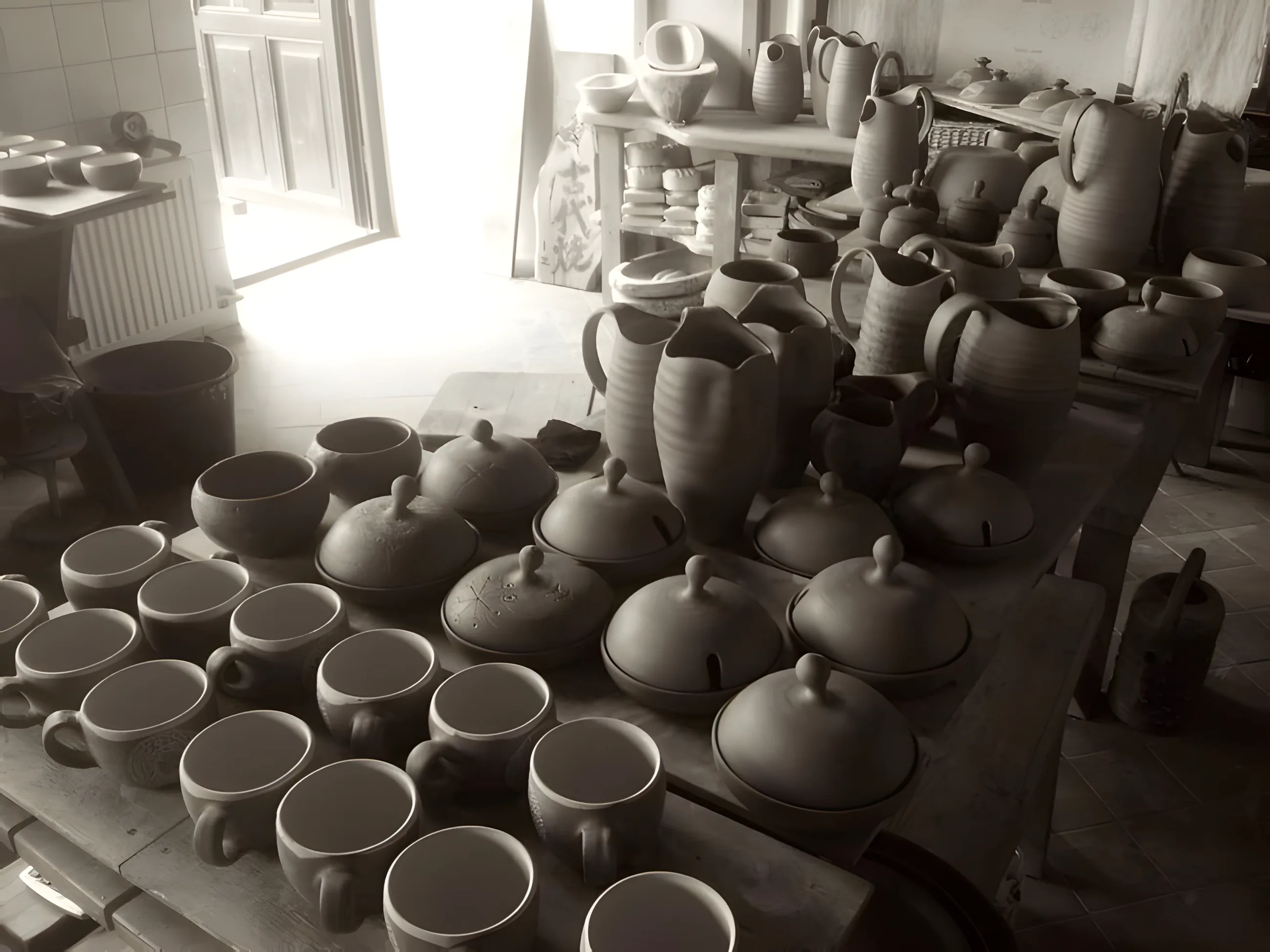
Latvian ceramics, cups, and handles.
Tenis Preiss, Matiass’s father, made Latvian ceramics — working, like Arnis, in Dunte in the Limbaži region — and was a key figure in the Latvian ceramics world of the early 2000s. Where Arnis pursued mineral fire, Tenis pursued the discipline of use: cups, teapots, and vessels for the hand, thrown with a precision Matiass still measures himself against.
From him comes the family’s working standard — that a handle cannot be decorated into existence. It has to be pulled from the same clay, belong to the form, and then disappear into use. It is a quiet test, and it is unforgiving; a maker’s whole training shows in it.
“A cup can look simple, but the handle reveals everything.”
It has to belong to the form, and disappear into use.
.jpeg)
.jpeg)
.jpeg)
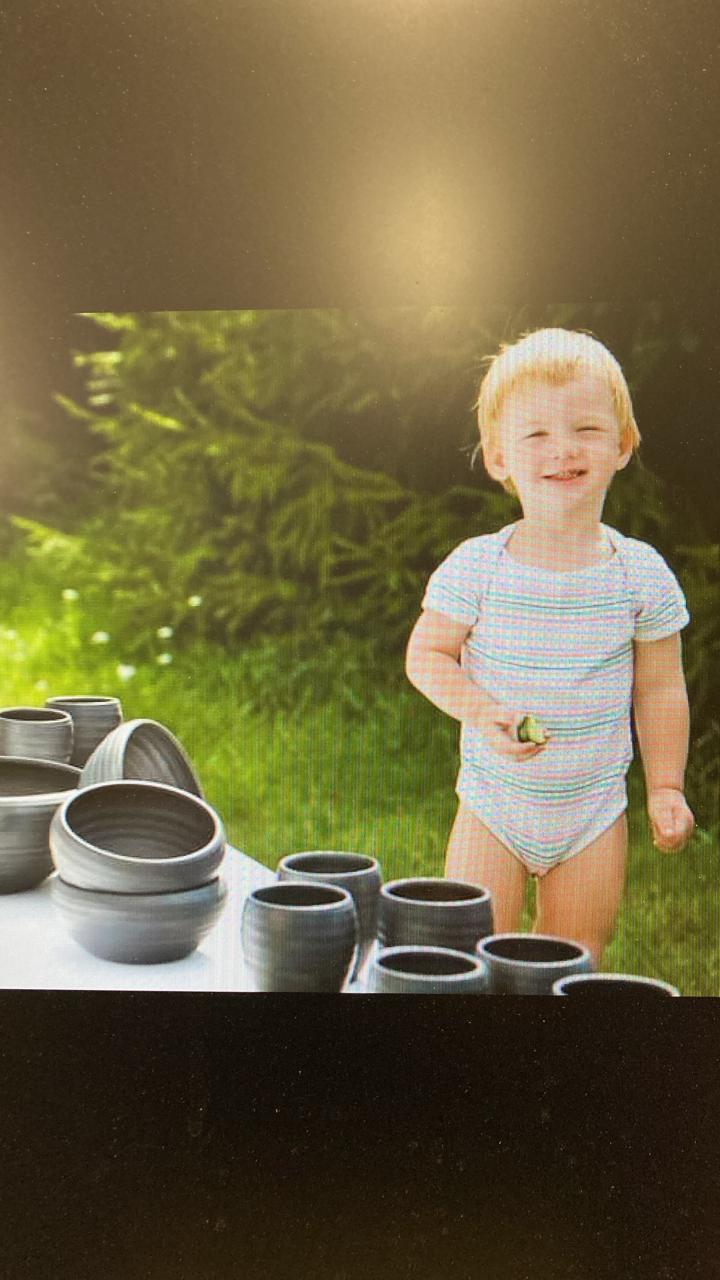
Summer around clay.
Matiass was taught directly by both men — not in lessons, but in proximity. Summers in his grandfather’s studio meant watching, trying, failing, and learning to look again. Nobody handed down a recipe book; what was handed down was the habit of taking a small object completely seriously.
At age three, he made a small bowl with a little ball-like piece in the middle. That piece was not kept. Around age five came the first kept pieces — handbuilt piggy banks and trays, fired alongside the grown-ups’ work in the same kiln.
Current work in Iceland.
Matiass moved to Iceland with his family when he was five, and lives and works there still. His ceramics carry all of it at once: Latvian clay memory, a long affinity for Japanese forms — the tea bowl, the yunomi, the unforced line — Icelandic quiet, and a modern insistence on precision.
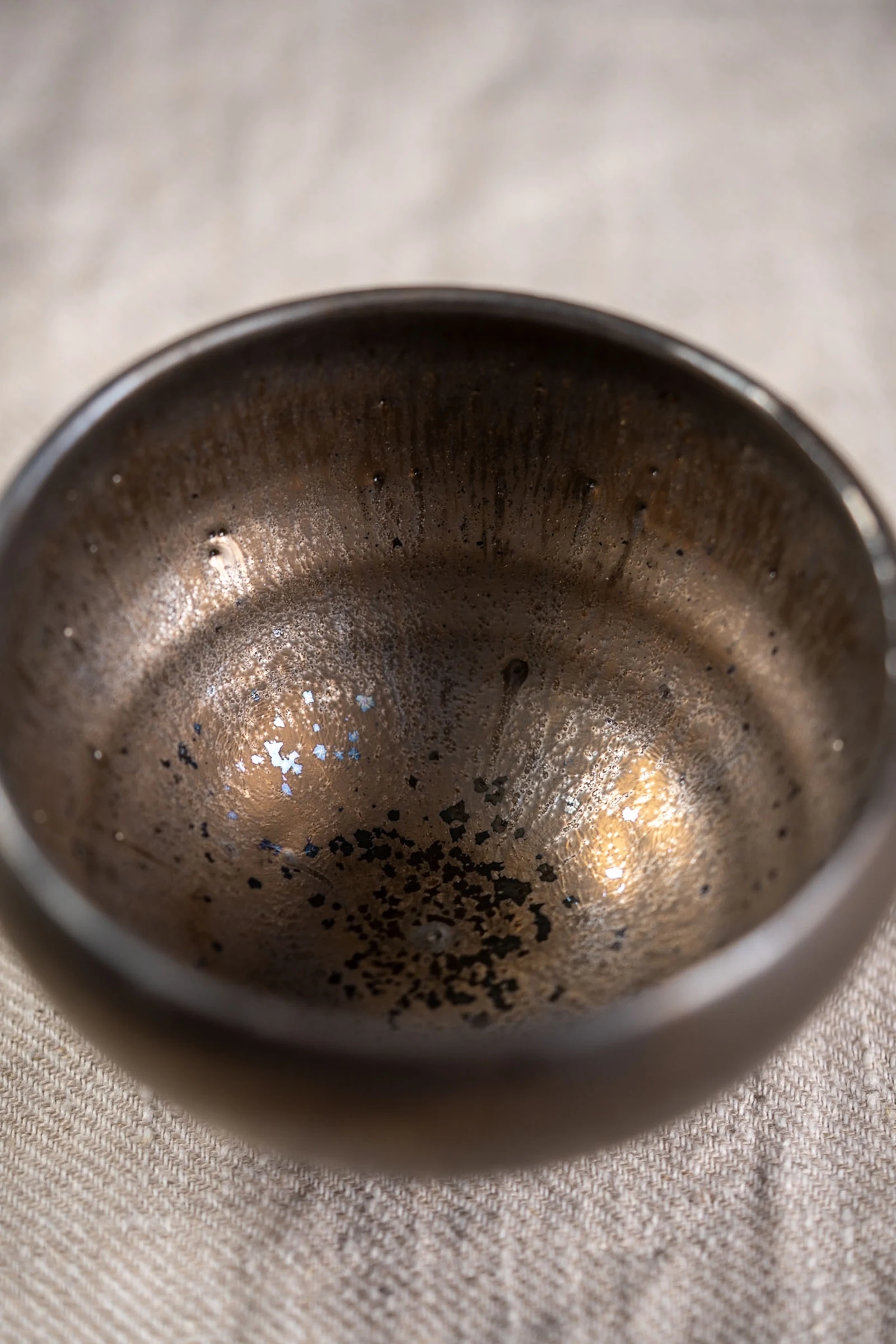
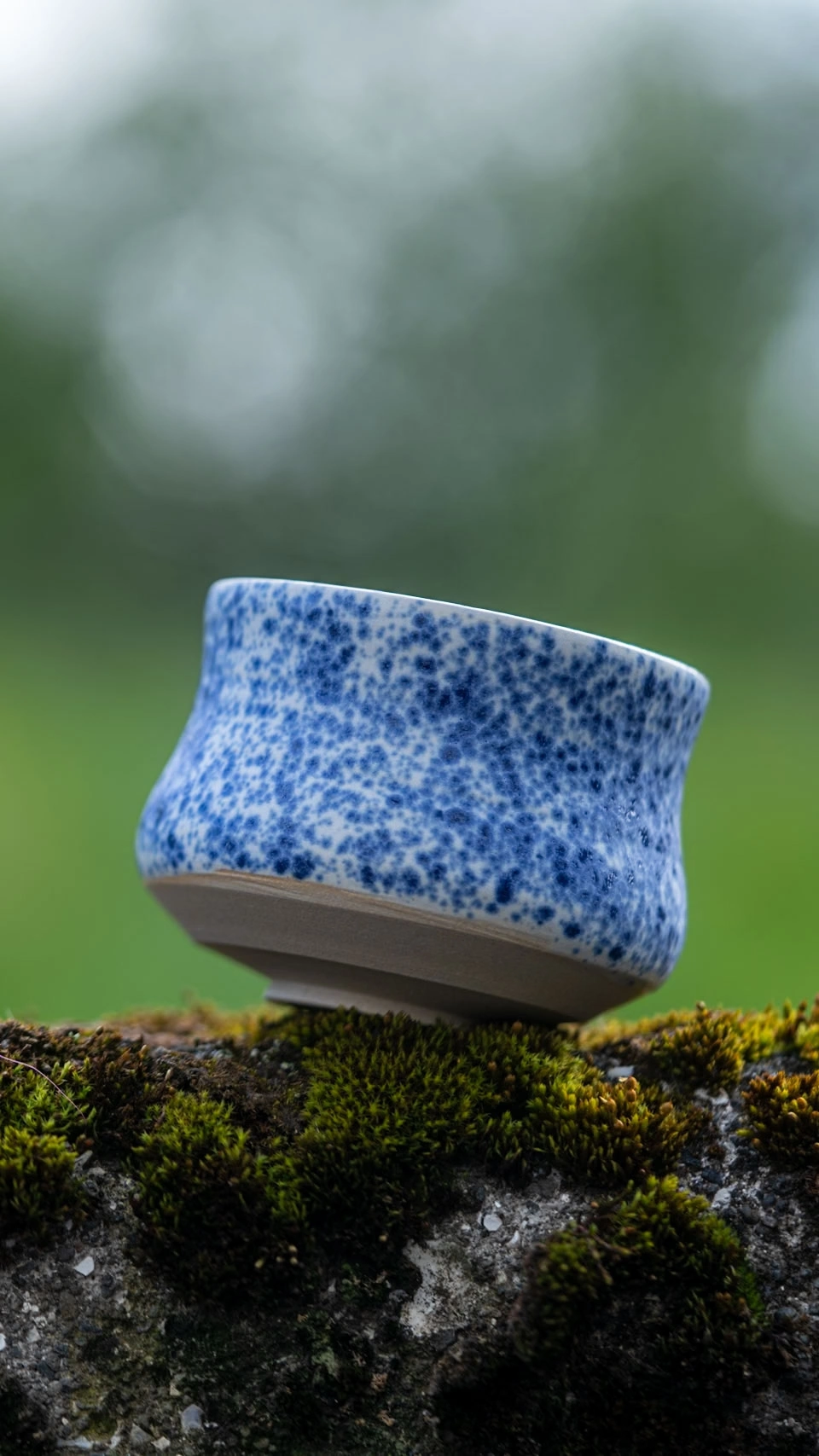
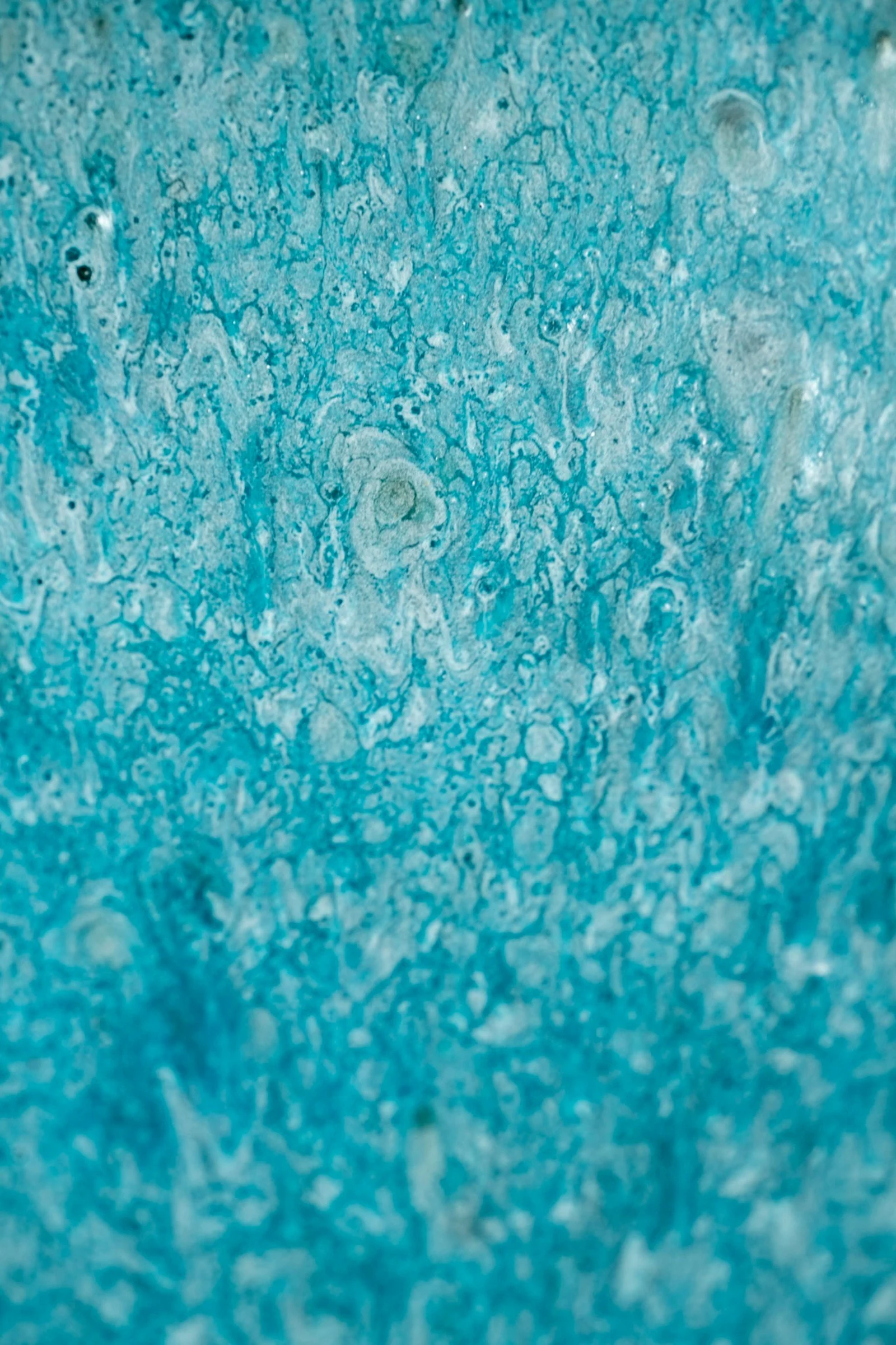
The work is wheel-thrown stoneware in crystalline and crackle glazes, made in short series and finished one piece at a time. Every finished piece is an edition of one: signed on the foot, numbered, and entered into the studio registry — a permanent, public record of what was made, when, and that there is exactly one.
Why every piece is one of one.
A crystalline glaze is not a decoration; it is an event. The glaze is loaded with zinc and silica, taken to the edge of melting, then held — sometimes for hours — at the narrow temperatures where crystals will seed and grow across the surface. The maker chooses the chemistry and the curve of heat; the kiln decides where each flower opens. No two firings agree, which is why no two pieces can.
A crackle glaze works the opposite border of the same physics. Glaze and clay are chosen to shrink at slightly different rates, so that as the piece cools, the surface breaks into a fine net of lines — a map of that one cooling, on that one day, that can never be redrawn.
This is what “edition of one” means here. It is not a marketing sentence; it is a physical fact of the process. Three generations of the family have worked inside that fact — Arnis in the crystal, Tenis in the thrown form, Matiass in both — and the standard each passed on is the same: if the fire gives you something unrepeatable, the form underneath had better deserve it.
The pieces that meet that standard go to the current collection; the ones that sell are kept visible in the archive. How a piece is made, start to finish, is written plainly in the journal.
Lineage is not nostalgia; it is a standard. To own one of these pieces is to hold the point where three generations of attention meet — recorded in the registry, signed on the foot, and made exactly once.
— Matiass Preiss